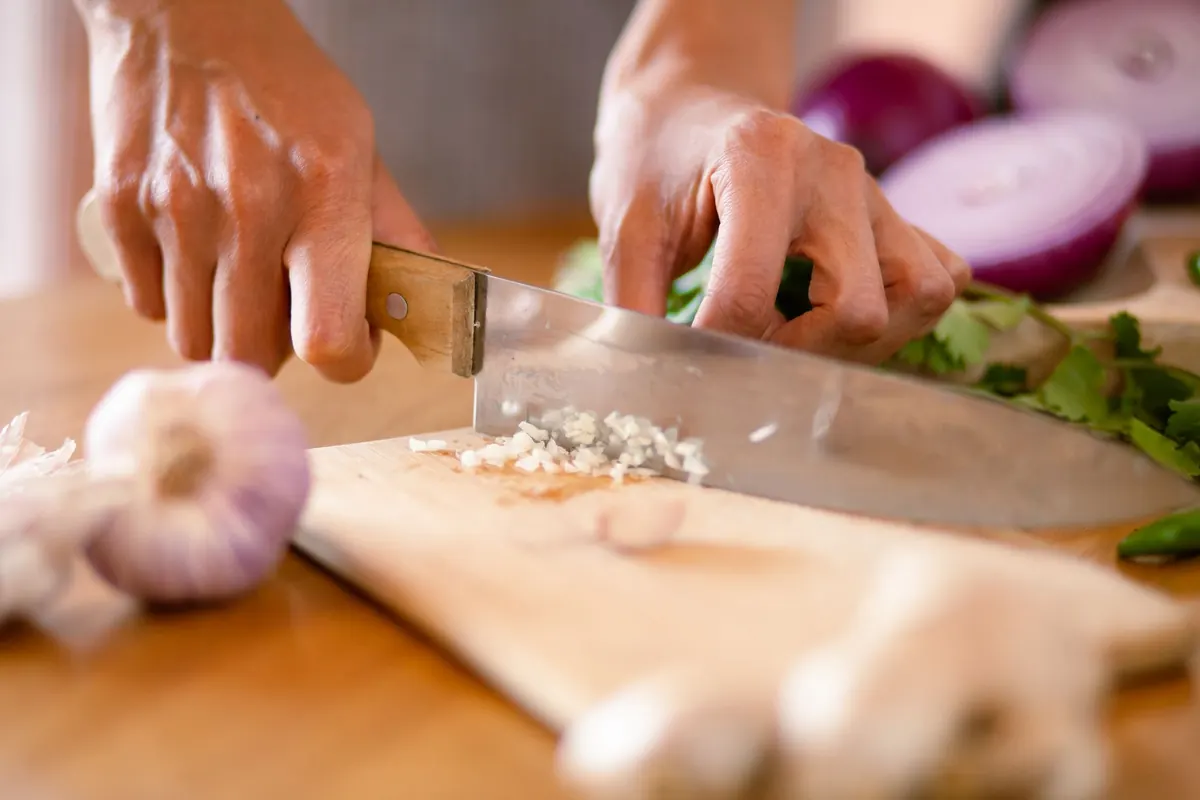
How to Build a Flavor Base: A Beginner's Guide to Aromatics
Every good soup, sauce, and stew begins the same way: a handful of chopped vegetables hitting a hot pan of fat. That first sizzle is where flavor is actually built, long before the stock goes in or the tomatoes get crushed. Get it right and a plain pot of beans tastes like it simmered for hours. Skip it, and no amount of last-minute salt will quite fix things.
Building a flavor base is a technique, not a talent. It comes down to three decisions: which aromatics you use, what order they go into the pan, and how long you let them cook before anything wet joins them.
What a Flavor Base Actually Does
A flavor base — mirepoix in France, soffritto in Italy, the holy trinity in Louisiana cooking — is the layer of aromatic vegetables cooked in fat at the start of a dish. It does three things at once.
It builds sweetness. Onions, carrots, and celery release sugars as their cell walls break down, which is why a proper base tastes round rather than sharp.
It carries flavor. Many of the compounds that make garlic, spices, and herbs taste like anything at all are fat-soluble. Cook them in oil or butter and those flavors travel through the whole pot. Drop them into water and they stay locked up.
And it creates body. Softened aromatics break down into the liquid, thickening a sauce slightly and giving it a savory backbone that a broth alone won't have.
The Core Aromatics and What Each One Brings
Classic Western cooking leans on four: onion, garlic, carrot, and celery. You don't need all of them every time, but knowing what each contributes makes substitutions easy.
- Onion — the workhorse. Sweet, savory, and slightly sulfurous when raw. Cook it gently and it turns jammy; push it hard and it turns bitter. Yellow onions for long cooking, red for raw, shallots when you want something delicate.
- Garlic — sharp raw, nutty and sweet once it hits fat. It burns faster than anything else in the pan, so it usually goes in last of the fresh aromatics. Sliced garlic cooks more slowly than minced.
- Carrot — sweetness and a little earthiness, plus body once it softens. It also gives a base its warm color. Cut it small; carrot takes longer than onion to break down.
- Celery — the one people skip, and the one they miss. It brings a clean, faintly bitter green note that keeps a rich base from tasting flat. Leaves included, if you have them.
Together these four cover sweet, savory, bitter, and green. Leave one out and the base still works. Leave out two and you will notice.
Order Matters More Than You Think
The pan is a sequence, not a dump. Here is the order that works for most soups, stews, and tomato sauces.
- Heat your fat over medium. Butter for flavor, olive oil for heat tolerance, or a mix of both.
- Add the hardest vegetable first — usually carrot, sometimes celery — and give it two or three minutes alone.
- Add onion and celery. Cook until soft and translucent, not browned, five to eight minutes, stirring occasionally so nothing catches.
- Add garlic and any dried spices. Thirty to sixty seconds, just until fragrant.
- Add tomato paste if you're using it, and cook it into the vegetables for a minute or two until it darkens.
- Deglaze with a splash of wine, stock, or even water, scraping up the browned bits.
- Add your liquid and carry on with the recipe.
Notice what doesn't happen: nothing browns much. For a soup or a braise you want a soft, sweet base. Save the hard sear for a ragù or a dish that wants deep roasted flavor.
Spices and Herbs: Bloom Them
Dried spices are mostly fat-soluble too, which is why a pinch of cumin stirred into a hot pan smells completely different from the same pinch stirred into a finished pot. That thirty seconds in fat is called blooming, and it does more for a dish than doubling the amount added at the end.
Keep a few reliable combinations in mind. Cumin, coriander, and paprika for anything with beans or lentils. Oregano, thyme, and a bay leaf for tomato sauces and braises. Turmeric, ginger, and black pepper for curries. Salt goes in early and again at the end — seasoning in layers tastes better than seasoning once.
Watch the heat. Ground spices scorch in seconds, so if the pan is too hot, pull it off the burner, add the spices, and let the residual heat do the work.
Ratios and Regional Variations
Traditional mirepoix is roughly two parts onion to one part carrot and one part celery by weight. Soffritto skips the carrot and leans on onion and celery cooked slowly in olive oil. The Cajun holy trinity swaps carrot for green bell pepper. A Latin sofrito might start with onion, garlic, and pepper, then add tomato and cumin.
None of these are rules. They are starting points that tell you what a cuisine considers a good foundation. Cook a few and you'll start adjusting without thinking — a little more carrot because your tomatoes are acidic, extra celery because the stew needs lift.
Common Mistakes Worth Avoiding
- Crowding the pan. If the vegetables steam instead of sizzle, they taste bland. Use a wider pan or cook in batches.
- Burning the garlic. Golden is the goal; brown is already too far. Add it late and keep it moving.
- Rushing the onions. Five minutes of impatience is the difference between sweet and raw-tasting.
- Skipping the fat. A dry pan can't carry flavor. You don't need much, but you need some.
- Not tasting as you go. The base should taste good before the liquid goes in. If it doesn't, fix it now.
Try It With One Pot This Week
Pick a recipe you already make — a lentil soup, a simple tomato sauce, a chicken stew — and give the base its full ten minutes. Chop the onion, carrot, and celery a little smaller than you usually bother to. Let them soften properly. Bloom the spices. Taste before you add stock.
That's the whole skill: aromatics, fat, heat, and a bit of patience. Do it a few times and you'll stop measuring and start cooking by smell, which is where the real confidence kicks in.
Photo: Los Muertos Crew / Pexels